
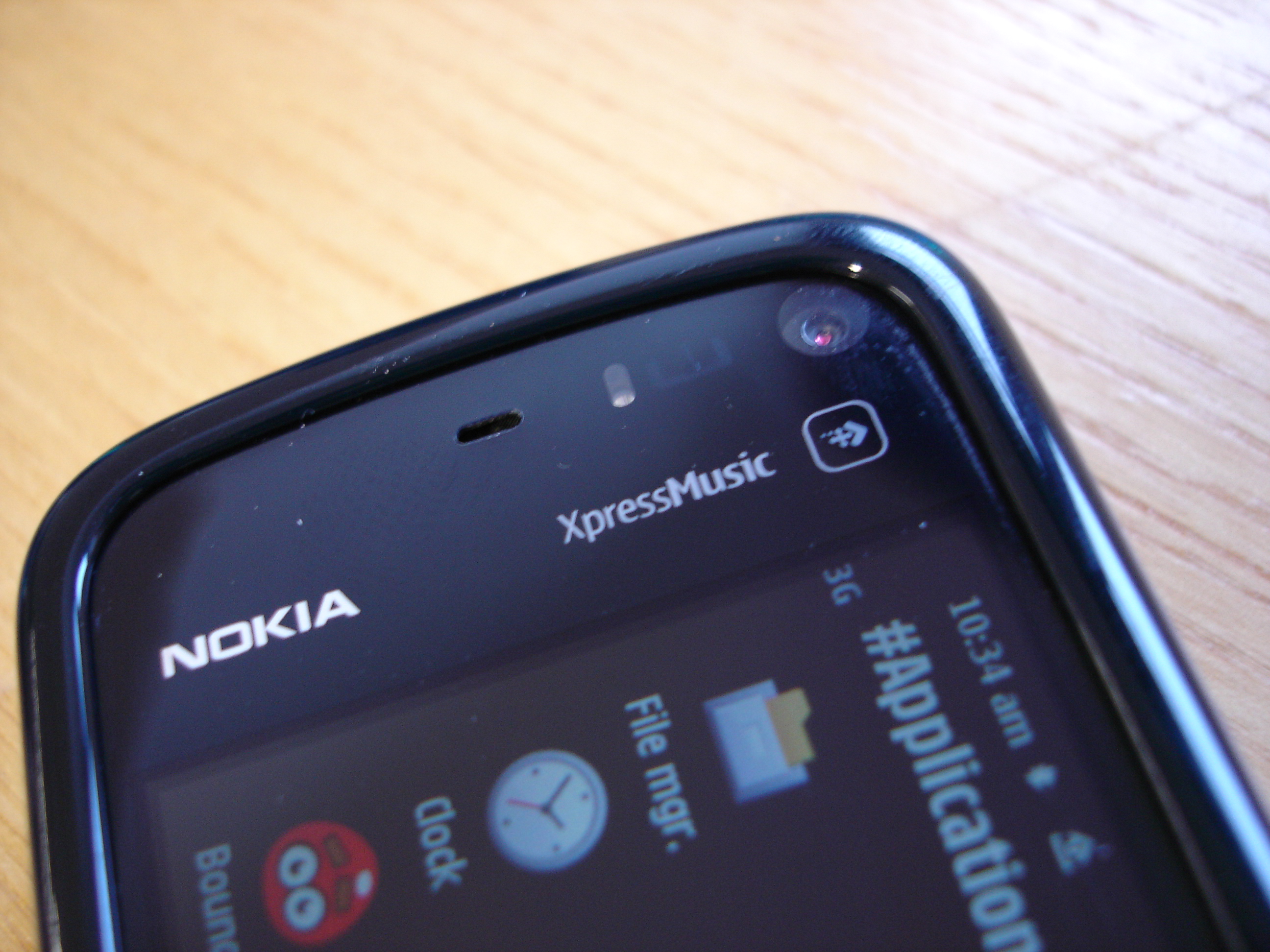
The overall design of the device, screen apart, is in line with typical mid range candy bar phones from Nokia. The materials are dominated by light plastics, chiefly black, but with a coloured highlight running around the sides of the phone. Build quality is good, with no rattles or unwelcome squeaks, and it should have good long term durability. It certainly gives the feeling of being able to stand up to quite a lot of abuse.
The front of the device is dominated by the 3.2 inch resistive touch screen, which has a resolution of 360 x 640 pixels (Nokia refer to this as nHD). This is much higher than most previous S60 devices (QVGA: 240 x 320) and has a wider aspect ratio (16:9 compared to 4:3). Touchscreens typically use resistive or capacitive technology; capacitive touchscreens (as used on the iPhone) are generally regarded as more sensitive and work better in sunlight, but only work with finger touch, whereas resistive touchscreens can work with any object (finger, stylus, when wearing gloves etc.). The 5800's screen is set behind the resistive layer and is therefore well protected.

No comments:
Post a Comment